
DEPARTMENT OF ELECTRICAL ENGINEERING (EE), is one of the major branches started when Prasad Institute of Technology (PIT) established in 2002, aims to cultivate proficient engineers endowed with advanced professional expertise, ethical conduct, entrepreneurial mindset, analytical abilities, and critical problem-solving skills through effective pedagogical methods, research initiatives, and industrial partnerships.
The department's faculty, a diverse amalgamation of academic and industrial expertise, has consistently engaged in research on numerous advanced technologies. The department's academic excellence is evidenced by the achievements of its students and the prestigious roles held by its alumni in both industry and academia.
The department aims to enhance the expertise of teachers and students by organizing workshops, industry-institute interactions, continuous improvement programs featuring distinguished figures from industry and academia, seminars, and research activities.
The department possesses well-equipped facilities, including the Electrical Machines Laboratory, Power System Simulation Laboratory, Control Systems Laboratory, Electrical Measurements and Instrumentation Laboratory, Power Electronics Laboratory, Electrical Workshop Laboratory, and Electrical Circuits Laboratory. The department spares no cost in outfitting the laboratories with state-of-the-art technology, including technical software such as MATLAB and P-Spice.
The Department of Electrical and Electronics Engineering is dedicated to innovation and excellence in teaching, research, and service, offering high-quality programs and collaborating with industry to cultivate world-class engineering professionals. The Department had

Contribute to the society by imparting quality education in the field of Electrical Engineering having high quality programs to produce globally component technocrats with high traditional and cultural values.

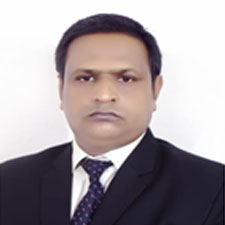
Electrical Engineering is the power Department of the Prasad Group of Institutions; the Department is making best efforts to produce highly trained and capable engineers who can take up the challenges of the real world. The quality of academic instructions, conduct guidelines and college activities are designed to produce competent and successful engineers. In the Department, the focus is on preparing professional engineers.
I am extremely happy to be associated with the students who have opted the core and oldest branch of engineering, As far as the Department is concerned, academic standards and practical work are the two key parameters. The faculty is involved in imparting quality education and strives to foster and encourage a teaching methodology that is both practical and theoretical in approach. This orientation has led to successful projects and trainings. The department believes in the multidimensional growth of all students.
| S.NO. | FACULTY NAME | QUALIFICATION | DESIGNATION |
|---|---|---|---|
| 1 | Dr. SRINIVASA RAO BALASANI | B.Tech, M.Tech, Ph.D | PROFESSOR & DIRECTOR |
| 2 | Mr. ANIL KUMAR YADAV | B.Tech, M.Tech | ASSOC PROFESSOR & HoD |
| 3 | Mr. DHARM SINGH YADAV | B.Tech, M.Tech | ASSOC PROFESSOR |
| 4 | Mr. KAMTA PRASAD VERMA | B.Tech, M.Tech | ASSOC PROFESSOR |
| 5 | Mr. GOVIND KUMAR MAURYA | B.Tech, M.Tech | ASST PROFESSOR |
| 7 | Mr. SHIV SHANKAR | B.Tech, M.Tech | ASST PROFESSOR |
| 6 | Mr. NISHANT VERMA | B.Tech, M.Tech | ASST PROFESSOR |
| 6 | Miss GUNJAN YADAV | B.Tech, M.Tech | ASST PROFESSOR |
| 8 | Mr. AVANEESH BHARATI | B.Tech, (M.Tech) | ASST PROFESSOR |
| 9 | Mr. MANJESH KUMAR | B.Tech, (M.Tech) | LECTURER |
| S.NO. | STAFF NAME | QUALIFICATION | DESIGNATION |
|---|---|---|---|
| 1 | Mr. SHIV BABU | DIPLOMA | LAB INSTRUCTOR |
| 2 | Mr. SANJAY YADAV | ITI | LAB TECHNICIAN |
| Room Description | No of Rooms | Seating Capacity | Room Equipped with | Usage |
|---|---|---|---|---|
| HoD Room | 1 | 1 | Internet Access , News Board | |
| Faculty Rooms | 1 | 12 | Internet Access , News Board | |
| Class Room | 4 | 75 | Podium, White Board | Lecture |
| Class Room | 1 | 75 | Podium, White Board | Tutorials |
| ICT Room | 1 | 75 | Podium, White Board, Lcd Projector, Internet Facility | Lecture |
| Departmental Library | 1 | 30 | Desktop, internet access, white board,table,chairs | Study |
| Laboratories | 7 | 30 | AC and DC Machines, kits, Desktop PCs, Softwares and Instruments present according to lab. | To Conduct Practicals |
The faculties are using multimedia elements LCD projectors in the Class room. It will help the faculties to represent the content in a more meaningful way using different media elements.
Various multimedia tools used are:
| Tools | Methods | Metaphor |
|---|---|---|
| Power Point Presentation by referring E-learning videos | Easy to prepare and it can be prepared with many of the popular multimedia technique’s. | Slide Based |
| Demonstration Videos and Lectures | Easy to prepare and download | Web based learning |
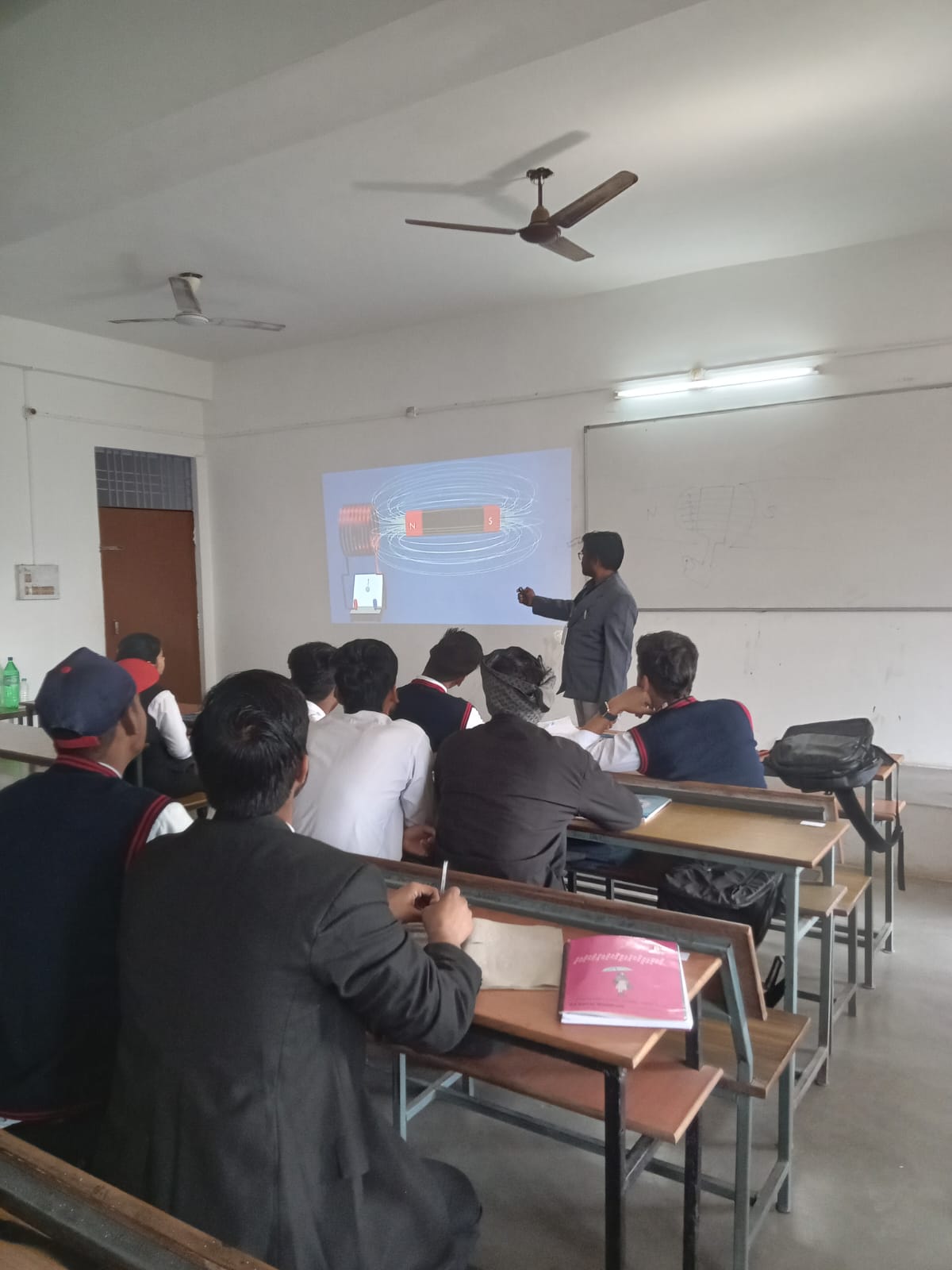
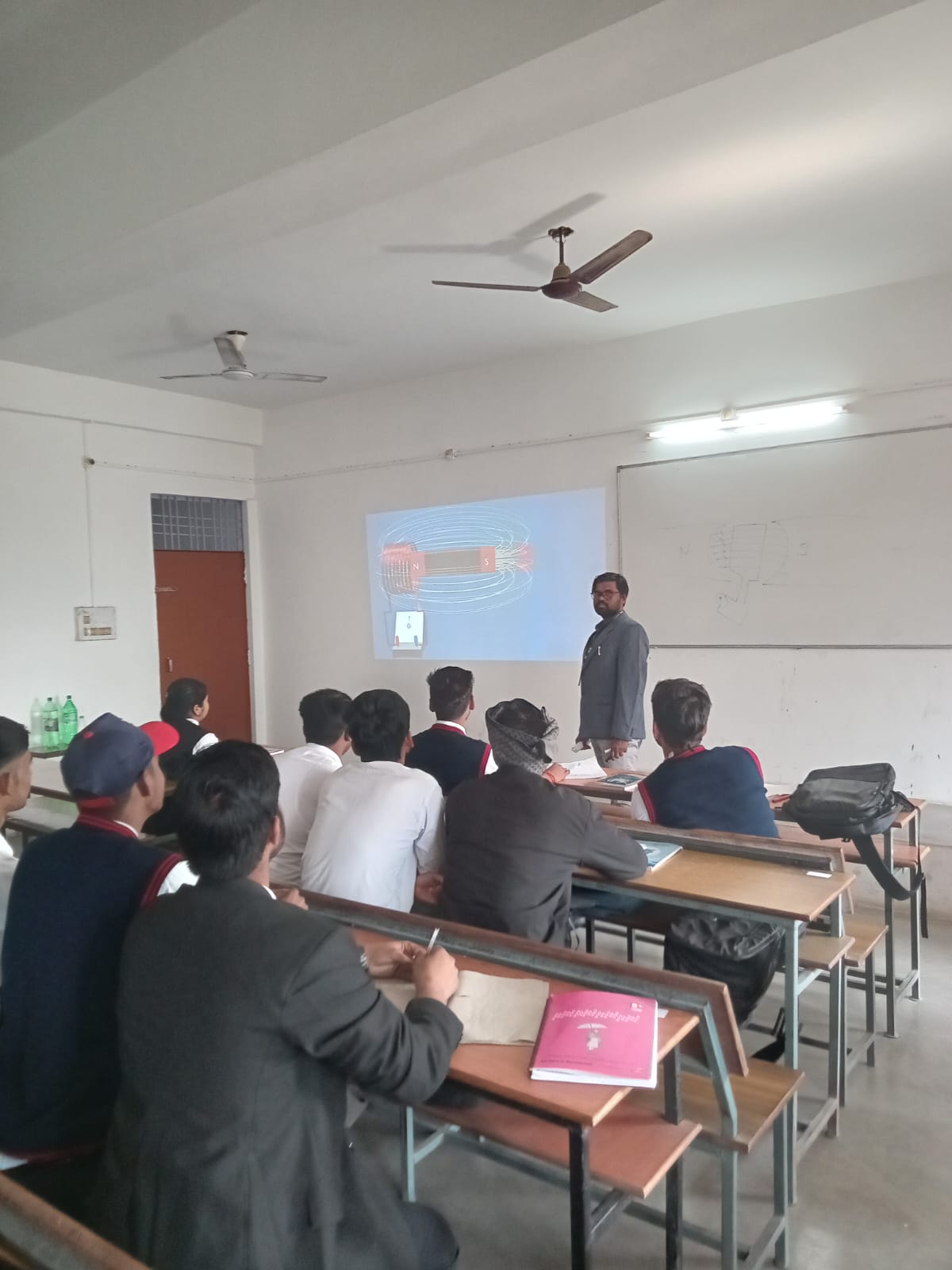
Students are advised to register for MOOCs (Massive Open Online Courses) and watch NPTEL and SWAYAM videos and the students are encourage to write assignment in classroom, students are encouraged to give presentations to improve their basic knowledge, communication skills in the respective subject
The Institute has been aware of two main important facts: Firstly, that the interaction with the corporate world during summer placement helps the students to sharpen their managerial and incisive skills and, secondly, the performance of a professional institute is gauged in terms of the quality of placements to its outgoing batches. As such, the Institute has established a full-fledged and well-equipped Training and Placement Cell which provides active support to the students in getting quality summer/Project training as well as final placements. In past, the Institute has an outstanding record of quality placements.
The students of the PRASAD are absorbed by leading national and multi-national companies every year. Some of the prominent companies that visit PRASAD regularly for providing Summer Training & Placement to the B.Tech students are.
Mobile : +91 9415275758; Email ID:[email protected]